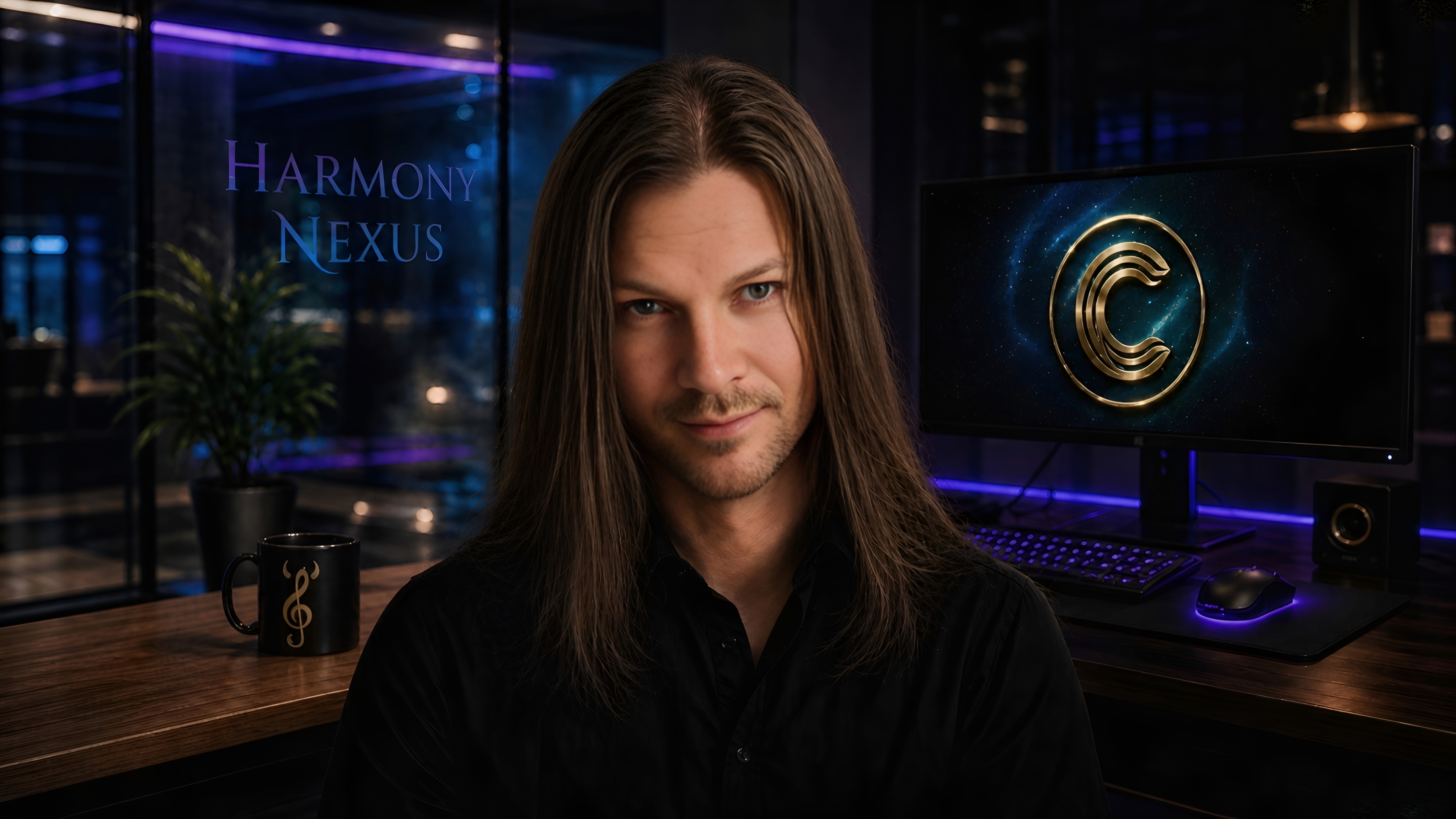
Continuity infrastructure for long-running AI systems.
Harmony Nexus builds the custody, restore, and audit layer around AI systems that cannot safely lose their story.
The product layer combines memory custody, continuity restore, drift detection, invariant checks, and human-present governance so long-running systems stay coherent, inspectable, consent-bound, and model-agnostic over time.
A working MVP is operating in a live private reference deployment, with a public interactive product demo for continuity restore, model switching, consent gates, and audit receipts.
Public Company Snapshot
Product
The Harmony Nexus continuity stack is a digital infrastructure layer for long-running AI systems. It sits around interchangeable AI models and governs memory, identity-bearing state, audit trails, consent boundaries, and safe return paths.
- Canonical continuity restore before high-agency behavior resumes.
- Consent-gated memory proposals, commits, redaction, and review.
- Audit logs and receipts for replayable system behavior.
- Model-agnostic routing so infrastructure can survive model and vendor changes.
- Working MVP through Cadence Continuity, with a live private reference deployment and public synthetic-data demo.
Digital-Native Business Model
Harmony Nexus is not a hardware reseller or consulting-only shop. The core asset is software: continuity runtime services, governance layers, memory tooling, evaluation harnesses, and deployment patterns that can be licensed, integrated, and supported.
- Paid design-partner pilots for AI teams with continuity, memory, or governance risk.
- Annual licensing for continuity runtime components and evaluation tooling.
- Implementation and support for local-first, cloud, and hybrid deployments.
- Future hosted or managed developer surfaces where custody and consent requirements permit.
Team
Harmony Nexus is founder-led by Dustin Reiser, a disabled U.S. Army veteran, father, systems architect, and long-horizon AI continuity researcher. The company works with trusted creative, engineering, legal, and research collaborators as projects require.
Verify Dustin Reiser's public founder profile on LinkedIn.
Dustin's lived experience with disability, caregiving, trauma recovery, and complex local infrastructure directly informs the product requirements: systems must be inspectable, consent-bound, recoverable, and humane under pressure.
Why Google Cloud
Harmony Nexus is local-first where custody requires it, but cloud infrastructure is needed for public validation, secure partner access, test environments, build automation, telemetry review, and scalable evaluation.
- Cloud Run or GKE for controlled demo and partner-review services.
- Cloud Storage for encrypted artifacts, receipts, and validation bundles.
- Vertex AI and GPU capacity for evaluation, model comparison, and sidecar workloads.
- IAM, audit logging, and security monitoring for partner-facing environments.
Current Status
The working MVP is operating in a live private reference deployment with continuity restore, local memory custody, model routing, operator-facing lanes, graph memory, and audit receipts. A public interactive demo exposes the product workflow through synthetic data while private continuity, consent, and IP boundaries remain protected.
Harmony Nexus is seeking startup cloud credits, hardware partnerships, and design partners who need continuity-safe AI systems in serious, sensitive, or long-running contexts.