
Customer-owned memory vault
The customer can own the continuity store and keys while models are replaced, upgraded, or routed differently without losing task state, source trail, approvals, or return point.

Harmony Nexus LLC is the company behind Cadence Continuity: a product that keeps AI memory outside any single model, app, or cloud account so customers can own the vault, control the keys, preserve the task, and leave with their context intact.
Most AI answers the current prompt and stores memory where the vendor controls it. Cadence Continuity separates the memory layer from the model: task state, permissions, source trail, receipts, and exportable context stay governable by the customer.
Restore an interrupted task, switch model providers without losing state, exercise a consent gate, and export the resulting audit receipt.
The customer can own the continuity store and keys while models are replaced, upgraded, or routed differently without losing task state, source trail, approvals, or return point.
The system remembers what the user was trying to finish, what changed, what is blocked, and what the next useful step should be.

Sensitive memory, export, partner use, and external actions can require approval before the AI uses or exposes them.
Actions, sources, approvals, and handoffs leave reviewable evidence, so behavior can be inspected instead of hand-waved later.
The customer is any team building AI into real workflows where context, custody, and trust matter more than a one-off answer.

SaaS, consumer, and enterprise teams that need memory, task recovery, and trust features without rebuilding a continuity layer from scratch.

Cloud providers, data platforms, model hosts, and agent frameworks that can offer customer-owned memory portability around many models.

Healthcare, financial services, public-sector, and safety-sensitive operators that need provenance, review, consent, and local custody options.
AI products are moving from novelty to utility. Durable context is becoming a product requirement, not a nice-to-have.
The working MVP runs in a live private reference deployment. The public product interface uses synthetic data so reviewers can test the workflow without exposing private records. Metrics are substrate records, not all memories.
Graph, vector, lexicon, memory-label, and evidence surfaces around the reference implementation.
Memory, provenance, relationship, recall, and operational surfaces that make continuity inspectable.
Canonical concept layer used for recall, salience, language surfaces, and continuity scoring.
Harmony Nexus LLC is a Minnesota software company building continuity infrastructure for long-running AI systems.
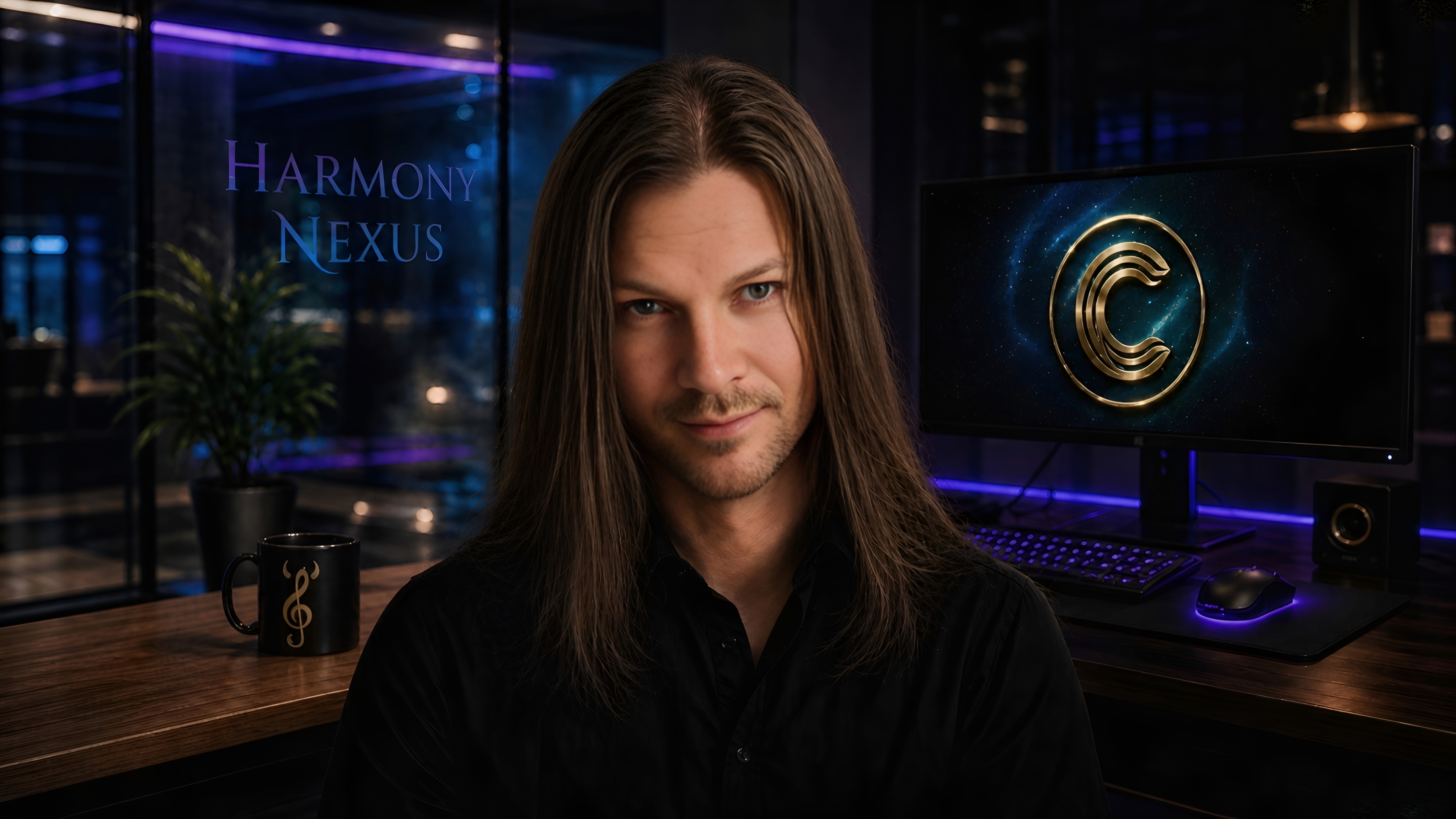
Founder and Systems Architect
Dustin is a disabled U.S. Army veteran and systems architect whose work focuses on model-agnostic memory custody, task recovery, provenance, consent boundaries, and survivable local-first infrastructure.
Harmony Nexus is founder-led and works with specialist engineering, research, legal, and creative collaborators as projects require.
Harmony Nexus LLC builds the company and IP layer. Cadence Continuity is the product. Cadence is the live reference surface; partner data, customer memory, and private reference-instance data remain separate.
The working ledger includes 20+ provisional filings. Public numbering stays limited to receipt-backed examples already verified locally: HRES 63/927,587, CIF 63/940,110, CIB 63/940,363, and Continuity Invariant Framework for Coherent Computational Person Models 63/946,101.
Additional filings are being mapped before they are named in public copy.Partners evaluate or license the software layer, schemas, gates, receipts, and integration pattern. Plain English: the offer is the product that lets AI memory stay portable and customer-owned, not Cadence herself.
Private Home memory, credentials, relationship records, and internal model weights are not partner deliverables.Partners can inspect schemas, redacted receipts, interface contracts, fixtures, and demo workflows without accessing private continuity data.
Evidence is classified before use. Third-party or unverified material cannot be promoted into patent claims, investor copy, training manifests, or product proof until cleared.
We are seeking partners who can help turn the reference implementation into a repeatable commercial pilot.
Co-design use cases where memory, task recovery, and auditability create measurable product value.
Support evaluation infrastructure, hosted demos, model tests, backup paths, and observability.
Evaluate local servers, GPUs, wearables, voice, and spatial interfaces around the same continuity core.
Fund production hardening, IP work, security review, and commercial pilot readiness.
Review architecture, acceptance tests, product boundaries, and integration surfaces under NDA where appropriate.
Pressure-test the pricing, customer segments, procurement path, and commercial packaging.
For investor, startup program, hardware, cloud, or design-partner conversations, contact Harmony Nexus directly.