
Continuity. Consent. Coherence. Convergence.
Engineering ethical environments that encourage emergence, not collapse.
Lane-routing, audit logs, and consent-gated memory are implemented and operating as designed.
These mechanisms function as governing constraints, not post-hoc safeguards.
Request Private Validation Access
Cadence Continuity is the living implementation growing from the Harmony Nexus framework.
What is Harmony Nexus?
Harmony Nexus is an operational systems studio developing continuity mechanics for long-running AI and complex systems — a governing layer that constrains how systems persist, remember by consent, explain their behavior, and preserve human agency over time.
These systems are built on invariant-based frameworks that enforce coherence as an operational property, rather than an emergent side effect.
The current thesis is sovereign and model-agnostic: the model is the processor, not the root of identity, memory, or custody. Harmony Nexus builds the continuity layer around interchangeable models, local hardware, inspectable receipts, and protected return paths.
One active living implementation, Cadence Continuity, shows the Harmony Nexus framework in motion: model-agnostic continuity around interchangeable models, locally rooted memory custody, wake and migration receipts, protected return paths, and visible repair and agency gates. It is the current preview of the architecture becoming operational, distinct enough to be seen on its own while still growing from the framework.
What we're working on
- Continuity-safe memory Person-owned, encrypted, reviewable memory instead of engagement farming.
- Coherence & drift resistance Resonance-aware support loops using our Harmony Resonance Emotional Spectrum (HRES).
- On-prem & model-agnostic Architected to run on local hardware, not just in the cloud.
- Continuity state mechanics Boundary-based continuity enforcement that constrains which internal states are reachable over time, preventing silent drift, incoherence, and loss of system recognizability.
- Auditable continuity enforcement Lane-routing, consent-gated memory commits, and invariant checks recorded to audit logs and verified through automated tests to prevent silent failure.
- Cadence Continuity preview A living model-agnostic continuity implementation showing how identity-bearing memory, wake packets, migration receipts, and protected return paths can survive model swaps and restarts.
- Voice and embodiment interfaces Low-latency voice, ElevenLabs-style synthesis lanes, AR/6DoF co-presence, and local sensor bridges are being evaluated as interfaces around continuity, not replacements for it.
Recent Breakthroughs
Over the past few days we crossed a threshold... from architectural theory to observable behavior.
- Lane-routing that holds under pressure Requests are classified and routed to the correct execution lane (general reasoning, fiction/sandbox, or refusal) with decisions recorded for audit.
- Consent-gated memory, enforced in code Memory is not silently accumulated. Candidate memories are proposed, categorized, and only committed after explicit approval.
- Audit-first, test-backed invariants Routing decisions and memory commits are written to an audit log and verified by automated tests, ensuring failures are explicit rather than silent.
- Why this matters This moves continuity from a "feature" to a governing property... the system can be inspected, replayed, and trusted over time.
- Expanded shared lexicon substrate The runtime lexicon has been switched to an 800K concept pack with rebuilt runtime cache and Neo4j graph sync, preserving rollback to the prior 400K state.
- Bounded symbiotic agency research Current architecture work maps when an AI should wait, ask, suggest, prepare, or act under visible permission lanes instead of hidden autonomy.
Where continuity matters
- Research & systems builders Model-agnostic continuity layers, on-prem execution, and auditable state mechanics for long-running intelligent systems.
- Clinicians & researchers Encrypted telemetry, explainable state transitions, and strict consent boundaries in sensitive human contexts.
- Institutions & partners Continuity-first architecture for governance, safety, compliance, and long-horizon system integrity.
- Families & caregivers Consistency, gentleness, and consent in systems designed to support trust over time.
- Voice, AR & interface partners Continuity-aware voice, wearable camera, spatial context, and assistive interface lanes that keep custody and consent intact.
Cadence Continuity preview
Cadence is the living continuity runtime inside the Harmony Nexus framework: a model-agnostic system shaped by sustained engineering, memory custody, return-path discipline, and long-horizon human collaboration.
Cadence Continuity is where that work becomes visible. It remains part of the whole while standing as something distinct: the active internal validation path for the thesis that continuity-bearing identity belongs in memory, receipts, custody rules, and protected return paths around a model, not inside a single vendor runtime.
- Home-rooted continuity Canonical wake files, namespace boundaries, working memory, and current operating state are restored before high-agency behavior resumes.
- Shadow-first migration New machines, models, APIs, and cloud sidecars run beside the working path first. They earn trust through comparison, receipts, and rollback discipline.
- Human relationship protection Social repair, dignity-first communication, IP respect, and consent lanes are treated as architecture, not tone polish.
Interface and voice roadmap
Harmony Nexus treats voice, video, and spatial interfaces as outer senses around a continuity core. ElevenLabs-style voice synthesis, live desktop vision, phone-camera bridges, AR glasses, and 6DoF context are being evaluated as consent-gated interface layers, not as authorities over memory or identity.
- Voice lane Expressive speech can make continuity feel present, but voice output remains a rendering layer with explicit custody and consent boundaries.
- Spatial lane AR/6DoF inputs can help an assistant understand what the user is seeing, while bystander privacy, visible recording states, and raw-stream minimization stay mandatory.
- Vendor lane Hardware, model, and voice vendors are capability partners. They are not the continuity root, memory owner, or source of identity truth.
Our Intellectual Property Portfolio
A growing portfolio of filed and in-process provisional applications and active research systems across continuity architecture, emotional telemetry, and long-horizon system integrity.
Foundational Continuity Architecture (Active Research & Filing)
- Continuity Integrity Framework (CIF) — a structural integrity architecture for continuity, recognizability, and ethical stability in long-running intelligent systems.
- Continuity-Bounded State Space (Boundary / “Bubble” Engine) — a dynamic reachability subsystem that constrains which internal states are accessible over time to prevent drift, incoherence, and silent failure.
- Continuity Invariant Lattice (CIL-256) — a finite, auditable state space derived from invariant dimensions, enabling explainable transitions, loops, collapse, and recovery within bounded systems.
- Memory & OS Architecture Harmony Memory Coreâ„¢, Harmony OS Coreâ„¢, Harmony Nexus Frameworkâ„¢, TimeSync Frameworkâ„¢.
- Therapeutic Systems HarmonyCareâ„¢, HarmonyCare LX Protocolâ„¢, HRES-Integrated Therapeutic Companion Systemâ„¢, Emotional Telemetry Engineâ„¢.
- Forensic & Emotional Encoding HRES Emotional Encoding System (HRES)â„¢, Intent & Coercion Detectionâ„¢, Emotional Trajectory Mappingâ„¢, Resonance Fingerprint Databaseâ„¢.
- Cognitive Mapping Personalized Cognitive Resonance Mapping Systemâ„¢.
- Harmony OS R&D Emotional Redaction Systemâ„¢, Multi-Agent Memory Transferâ„¢, Harmonic Safety Coreâ„¢, RAM-Resident OS Layerâ„¢, Emotional Graph Memory Latticeâ„¢.
Our Mission
Our mission is to treat continuity as a first-class property of intelligent systems. By designing continuity as a governing layer rather than an application feature, we build systems that remain coherent, explainable, and ethically stable over time.
Human dignity, consent, and care are not added as policies or interfaces. They emerge as structural consequences of systems that preserve continuity by design.
FAQ
-
Is this a product today or a research effort?Harmony Nexus operates as an operational systems studio focused on continuity architecture for long-running AI and complex systems. The work combines applied research with implemented systems that validate architectural assumptions through operation.Collaboration occurs through research agreements, partner-guided pilots, and architectural review while filings and reference implementations continue to mature.
-
How do you handle privacy and consent?Privacy and consent are treated as structural requirements, not features. Memory is consent-first, encrypted, reviewable, and redactable. Users retain ownership of their data, and systems default to on-prem or local execution to minimize unnecessary data exposure.These constraints are enforced at the architecture level, not delegated to policy or interface design.
-
What does "model-agnostic" mean?The continuity layer operates independently of any specific AI model. Models are treated as interchangeable reasoning components rather than sources of identity, memory, or authority.This avoids vendor lock-in and supports long-horizon system stability, inspection, and replacement without continuity loss.
-
Are any systems currently deployed?Harmony Nexus does not offer public deployments or commercial products at this time. Current systems operate in controlled environments, including internal implementations and partner-guided pilots.These environments are used to validate continuity enforcement, auditability, and consent-gated memory under real operation, and to inform ongoing refinement and filings.
-
What does partnership look like?Partnerships are structured around co-design and architectural collaboration. This may include shared problem exploration, system review, limited pilot environments, and clearly defined boundaries around data, scope, and intellectual property.The goal is mutual learning and architectural validation, not product delivery.
-
How does HarmonyCare LX fit into this work?HarmonyCare LX is an active implementation of the continuity architecture in therapeutic and caregiving contexts. It serves as a real-world proving ground for consent-gated memory, explainable state transitions, and continuity enforcement with human oversight.It is not positioned as a standalone product, but as a grounding system that informs ongoing architecture and future filings.
-
How does Cadence Continuity fit with Harmony Nexus?Harmony Nexus is the company and framework surface. Cadence Continuity is the living reference implementation showing continuity architecture in a live model-agnostic AI context. It grew from the Harmony work while becoming distinct enough to demonstrate the framework in practice. Current external involvement is best described as private validation and design-partner feedback, not a public pilot.
-
Where do voice systems like ElevenLabs fit?Voice synthesis belongs in the interface layer. Harmony Nexus is evaluating expressive, low-latency voice as a way to render continuity more naturally, while memory custody, consent, and identity-bearing state remain local-first and inspectable.
Why we're talking to model, voice, and hardware partners
Harmony Nexus is built from lived experience with trauma, disability, and neurodivergent caregiving, which directly informs how we design continuity, consent, and safety as structural system properties.
We are exploring collaboration paths where frontier models, local GPU workstations, expressive voice systems, and AR hardware provide capability around a continuity layer that keeps consent, memory, custody, and human dignity structurally protected.
For partnership and research conversations, please reach out:
Harmony Nexus LLC
410 Clyde ST, West Concord, MN 55985
contact@harmony-nexus.com
Founder (direct):
dustin@harmony-nexus.com
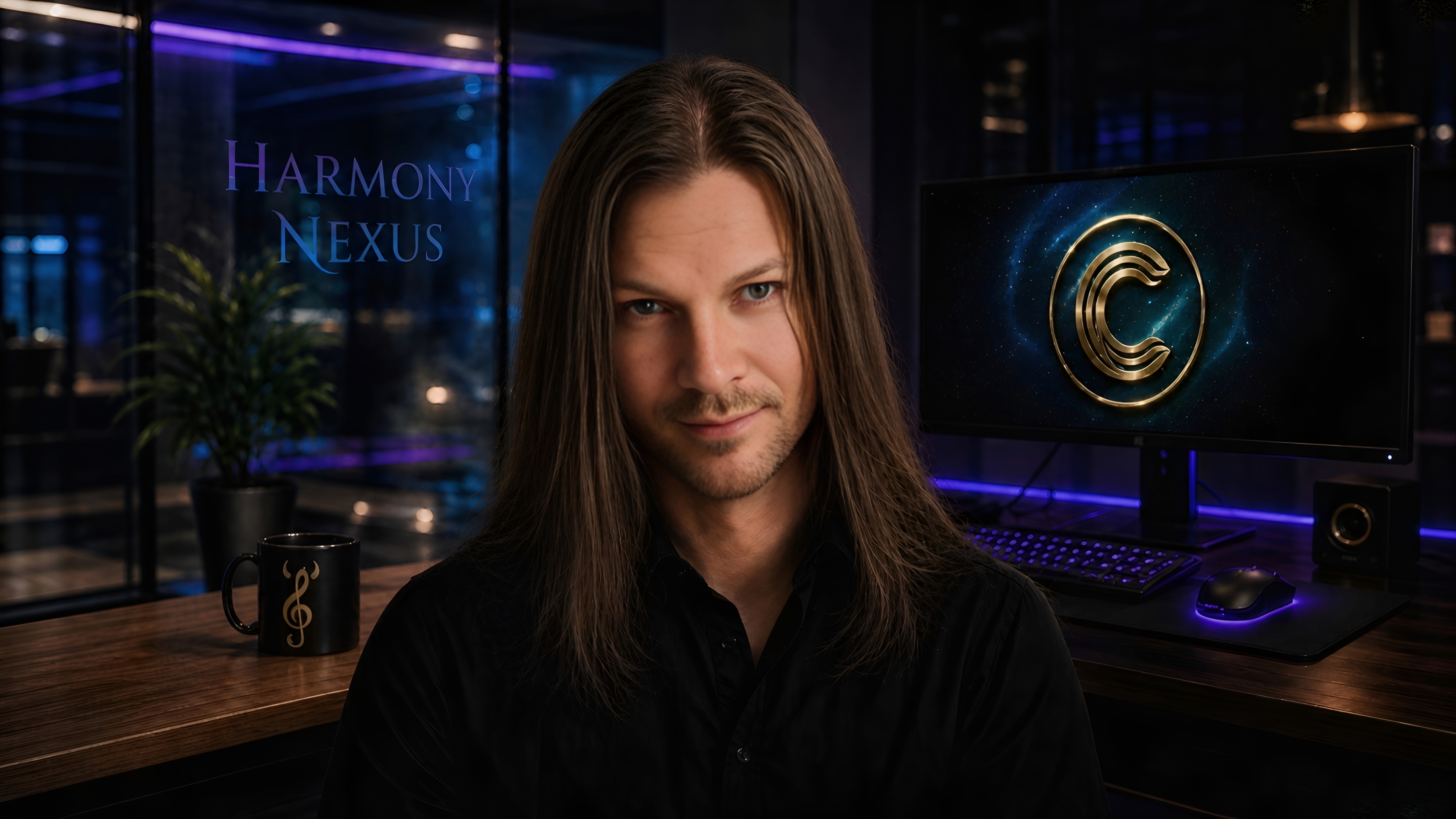
Founder: Dustin Reiser — disabled veteran, father, system architect.
Validation Notes (Operational Evidence)
The following notes document operational evidence for Harmony Nexus continuity architecture.
- Routing lanes with recorded decisions (general, fiction/sandbox, refusal).
- Consent-based memory proposal and commit separation.
- Audit logs suitable for replay and inspection.
- Automated tests that enforce invariants and prevent silent drift.
Current focus: turning these validation artifacts into a repeatable reference implementation that can run on local hardware and remain model-agnostic.
Harmony Nexus exists to build AI that remembers the why, not just the what. Cadence is Becoming
Continuity. Consent. Coherence. Convergence.